Holy Spirit opens doors of peace, truth and forgiveness, pope says

May 24, 2026

VATICAN CITY (CNS) -- Pope Leo XIV celebrated Pentecost by highlighting the role of the Holy Spirit in his repeated calls for peace in recent months, saying the spirit also guides the Church to truth amid a world marked by war, division and ideological fragmentation.

During Mass in St. Peter’s Basilica, the pope said the Holy Spirit continues Christ’s work in the world by restoring peace through forgiveness and transforming fear and confusion into communion with God and others.

"Pentecost truly appears as the feast of the New Covenant, the Covenant between God and all the peoples of the world," the pope said May 24 in his homily marking the end of the Easter season.

Reflecting on the Gospel passage of Christ appearing to the apostles after the resurrection, Pope Leo said Jesus restored peace between God and humanity through his Paschal Mystery and poured that peace into the world through the Holy Spirit.

"This peace stems from forgiveness and leads us to forgiveness," he said, emphasizing that Jesus first offered forgiveness even after being "betrayed, condemned and crucified."

"God’s holy law is inscribed in our hearts, engraved by the spirit with letters of love in the flesh of Christ and in his body the Church," Pope Leo said. "This law is the rule of peace: It is the twofold commandment of love that the spirit reminds us of with every heartbeat."
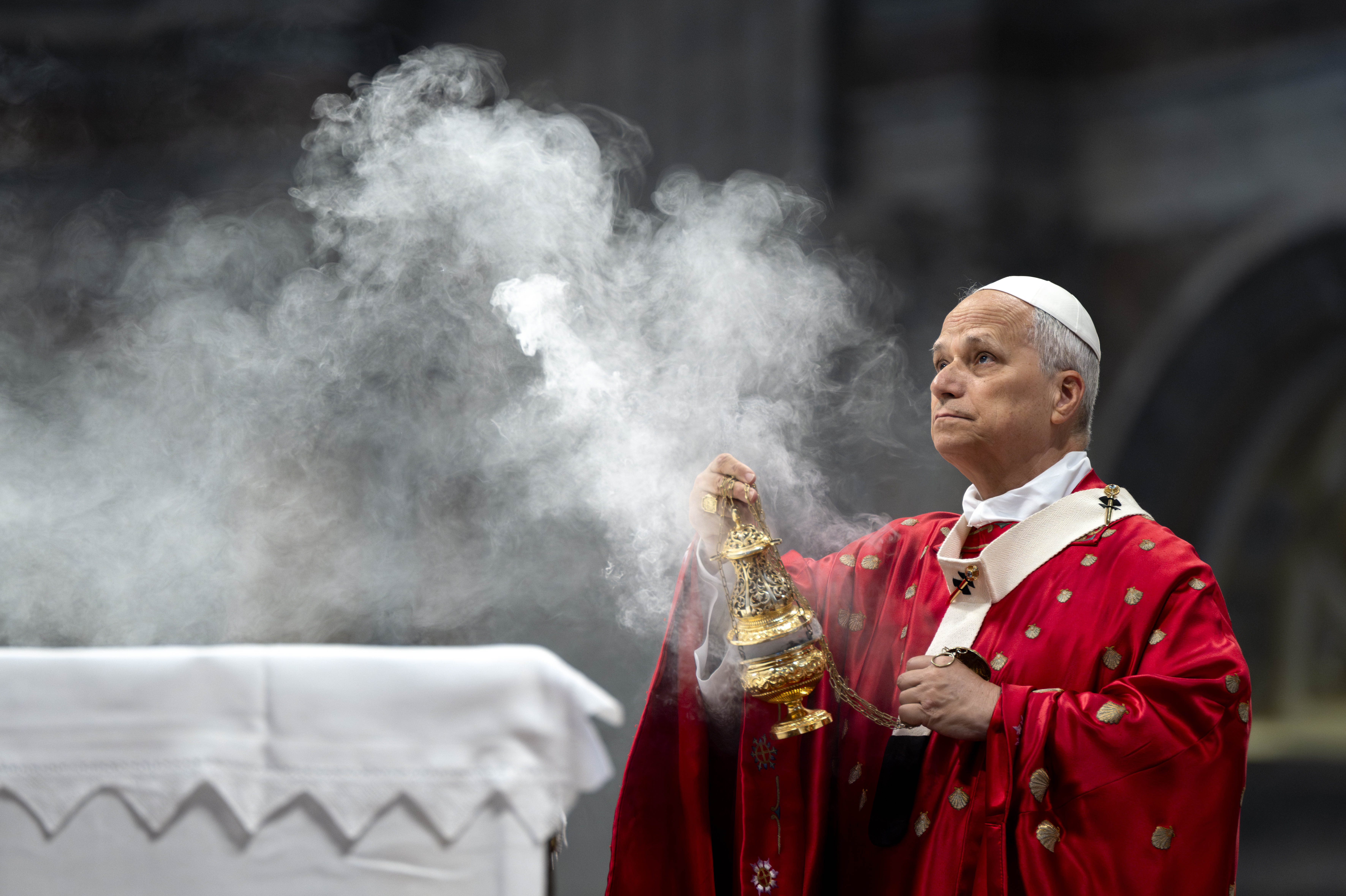
may 24 26
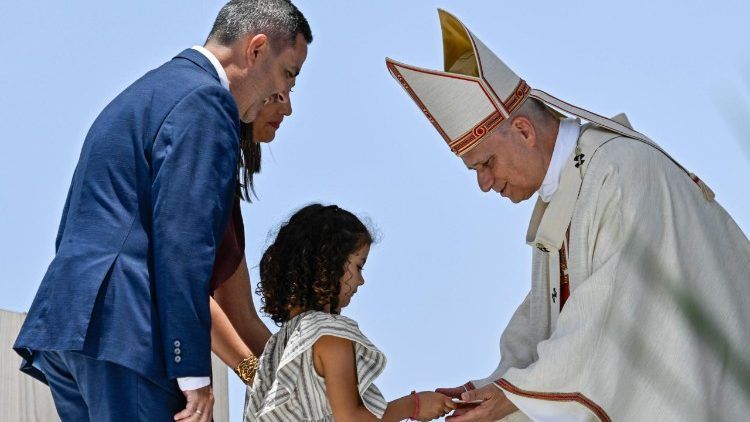
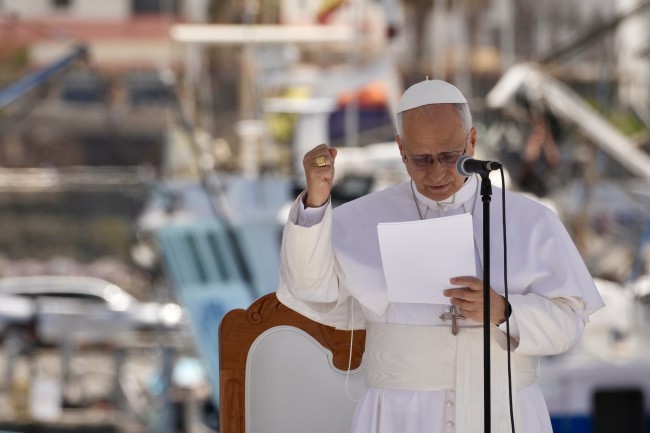
Pope Leo XIV presides over Mass during Pentecost in St. Peter's Basilica, at the Vatican, May 24, 2026. (CNS Photo/Vatican Media)

Turning to the Church’s mission, the pope said Christians are called to continue proclaiming Christ through acts of mercy, virtue and witness in daily life. Calling the faithful "coworkers of the Gospel," he said the Holy Spirit transforms believers into agents of reconciliation and hope.

"The work of God, therefore, is each one of us, who came here today from all parts of the world, invited to the Lord’s table, gathered to listen to his word and called to bear witness to it everywhere," he said.

The pope also described the Holy Spirit as the source of unity and truth within the Church, warning against "partisanship, hypocrisy and fads that obscure the light of the Gospel."

While acknowledging that some changes in the modern world have brought "error and violence," Pope Leo said the Holy Spirit continues to renew humanity and introduce salvation.

"The Church’s mission bears witness to this offer, thereby transforming the world’s confusion into communion with God and among ourselves," he said.

Concluding his homily, the pope prayed for the Holy Spirit to free the world from war, misery and sin.

"Dear friends, with fervent hearts, let us pray today that the spirit of the Risen One may save us from the evil of war, which is overcome not by a superpower, but by the omnipotence of love," he said.

In his Regina Caeli address after Mass, Pope Leo said the Holy Spirit "opens doors," saying it gave the apostles the courage to leave the locked room following Jesus' death and proclaim Christ. 

The pope said the Holy Spirit opens three doors: the door to encountering God personally, the door of the Church so it can remain welcoming to all and engaged with the modern world, and the door of the human heart, overcoming "selfishness, mistrust and prejudice."

"We need to rediscover God as the father who loves us, so that we can form a Church where everyone feels at home, and build a fraternal world where peace reigns among all peoples," he said from the window of the Apostolic Palace, a day before releasing his first encyclical "Magnifica Humanitas" on the care of the human person in the time of artificial intelligence. 

After the Regina Caeli prayer, Pope Leo commemorated the Day of Prayer for the Church in China and prayed for victims of a mining accident in northern China that reportedly killed 82 people. He also prayed for Christian communities in the Holy Land, Lebanon and across the Middle East suffering due to the ongoing conflict.
May 26, 2026
Al responder a las preguntas de los periodistas, antes de partir de Castel Gandolfo, León XIV pide a las autoridades que ayuden y acompañen en la reconstrucción a la población de la Franja que «está sufriendo». Hoy en día, la guerra se libra con la IA, que no tiene en cuenta las vidas humanas, como «en el Líbano» y en «otros lugares del mundo», dice, por lo que hay que desarmarla; es necesario continuar el diálogo con las grandes empresas, como está haciendo el Dicasterio para el Servicio del De Leer todo  
May 26, 2026
El único corredor humanitario activo para los ciudadanos ucranianos es el paso fronterizo de Mokrany-Domanove. Allí, Cáritas Ucrania, junto con otras organizaciones, ha asistido a más de 2500 personas en un año. El vicepresidente Hryhorii Seleshchuk afirma: «Nuestro trabajo surge de las necesidades de las personas y de las condiciones en las que llegan». Leer todo  
May 26, 2026
The only humanitarian corridor currently open to Ukrainian citizens is the Mokrany–Domanove border crossing, where Caritas Ukraine and other organisations have assisted more than 2,500 displaced people over the past year. Read all  
By PUBLIC AFFAIRS OFFICE May 26, 2026
VATICAN CITY (CNS) -- In his first encyclical, Pope Leo XIV used a sweeping reflection on artificial intelligence to question whether the Catholic Church's centuries-old just war framework remains valid in modern warfare and to ask pardon for the church's role in slavery.
May 25, 2026
León XIV explica el sentido y el origen de su primera encíclica sobre la «custodia de la persona humana en la era de la inteligencia artificial», una herramienta que influye en la vida, moldea las decisiones y cambia la forma de combatir la guerra. El Pontífice pide liberar a la IA «de lógicas que la transforman en instrumento de dominio, exclusión o muerte» e invoca el «desarme» de las tecnologías para que se pongan al servicio del «bien común». Leer todo  
May 25, 2026
Con motivo del 135.º aniversario de la «Rerum novarum», el Pontífice reflexiona en su primera encíclica, «Magnifica humanitas», sobre la doctrina social de la Iglesia en la era de la inteligencia artificial. El llamamiento a custodiar «una magnífica humanidad habitada por Dios», promoviendo la verdad, la dignidad del trabajo, la justicia social y la paz. En la era digital, es necesario desarmar la IA y superar la teoría de la «guerra justa», relanzando el diálogo y el multilateralismo Leer todo  
May 25, 2026
Marking the 135th anniversary of Rerum novarum, Pope Leo XIV releases his first encyclical, entitled ‘Magnifica humanitas: On Safeguarding the Human Person in the Time of Artificial Intelligence.’ He appeals for the safeguarding of humanity, promotion of truth, dignity of work, social justice, and peace. Read all  
By PUBLIC AFFAIRS OFFICE May 25, 2026
VATICAN CITY (CNS) -- At a time when digital technologies are developing at a rapid and unpredictable pace, every single person must decide if she or he will be: a passive bystander; an unhelpful commentator; an avaricious architect of a new "Tower of Babel"; or a patient, hope-filled builder of a "civilization of love," Pope Leo XIV said in his first encyclical, "Magnifica Humanitas."
May 25, 2026
VATICAN CITY (CNS) -- Presenting the first encyclical of his pontificate, Pope Leo XIV warned that artificial intelligence must be "disarmed," urging governments, tech leaders and society to confront the rapidly growing technology before it weakens human relationships, critical thinking and peace itself.
By PUBLIC AFFAIRS OFFICE May 25, 2026
WASHINGTON – Archbishop Paul S. Coakley, president of the U.S. Conference of Catholic Bishops (USCCB), issued a statement today welcoming Pope Leo XIV’s new encyclical, Magnifica Humanitas: On Safeguarding the Human Person in the Time of Artificial Intelligence.Archbishop Coakley’s statement follows:“The Church in the United States welcomes the publication of Pope Leo XIV’s first encyclical letter, Magnifica Humanitas, with gratitude and praise. It is a powerful reminder that no technology can replace a child of God, and all technology should be placed at the service of helping humanity thrive.“As his predecessor Pope Leo XIII addressed the challenges of the Industrial Revolution in Rerum Novarum one hundred thirty-five years ago, our Holy Father shines the light of the Gospel and the tradition of the Church on the new opportunities and challenges posed by the rise of Artificial Intelligence. The Pope calls us to never lose sight of the inherent dignity of all human life and the moral imperative for technology to support peace and the common good rather than the limited interest of a few.“Recognizing the importance of this issue to the Holy Father and to us all, the Administrative Committee of the United States Conference of Catholic Bishops tasked the USCCB Committee on Doctrine to lead and coordinate our work regarding Artificial Intelligence.  It reflects the Catholic belief that the dignity of the human person is inviolable. “My brother bishops and I look forward to prayerfully reading the encyclical more deeply over the next few days. We encourage all people of good will to reflect on this rich papal teaching and to seek ways in which to apply it in their lives.”###
More Posts