Criminals preying on migrants should 'repent' before it's too late, pope says in Canary Islands
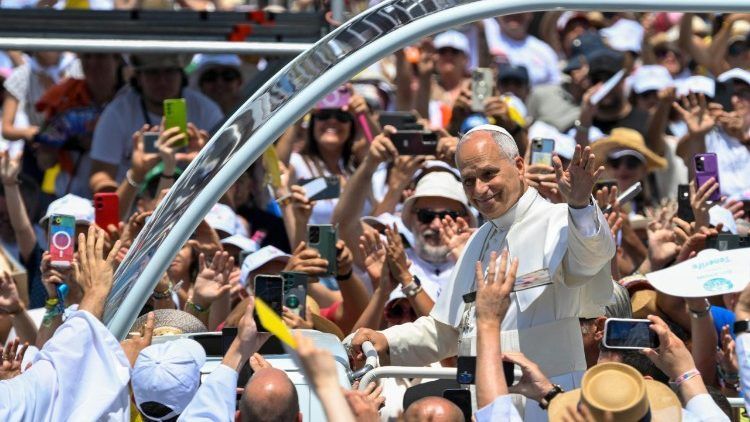
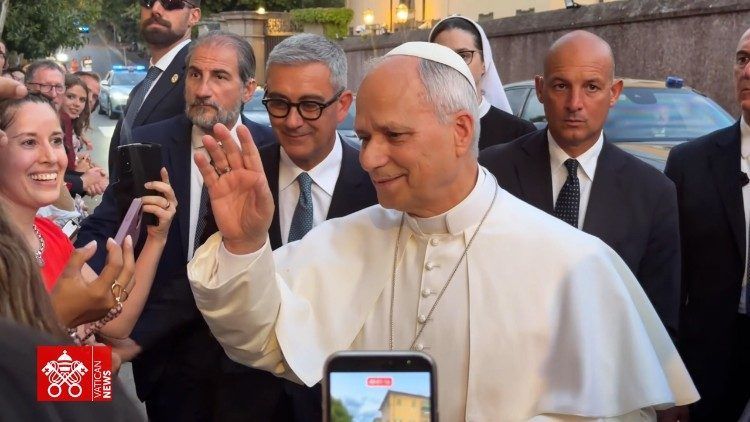
PORTA OF SANTA CRUZ OF TENERIFE, Spain (CNS) -- After hearing the stories of men and women who survived harrowing journeys in unsafe boats and then faced exploitation by their captors, Pope Leo XIV harshly condemned such criminals, and he admonished those who turn a blind eye.
"For every life lost, every family deceived, every body subjugated, every woman threatened, every worker exploited, you will have to appear before divine justice," he proclaimed, sending a "clear message to those who take advantage of people's desperation," during a meeting June 12 with migrants and those assisting them.
"To those who organize death routes, traffic in human beings, withhold documents, exploit workers, threaten women, deceive families and turn the suffering of others into a business," he said, "Stop" and "Repent while there is still time."
"The money wrested from the vulnerability of the poor will bring neither peace, nor honor, nor a future," he said, on the final leg of his June 6-12 apostolic journey to Spain, ending on the autonomous archipelago of the Canary Islands, which has become a major entrypoint for migrants into Europe.
More than 3,000 people died or disappeared in 2025 while trying to reach the Canary Islands, according to the Spanish NGO Caminando Fronteras. More than 10,000 people were recorded to have drowned along this dangerous migration route in 2024, it added.
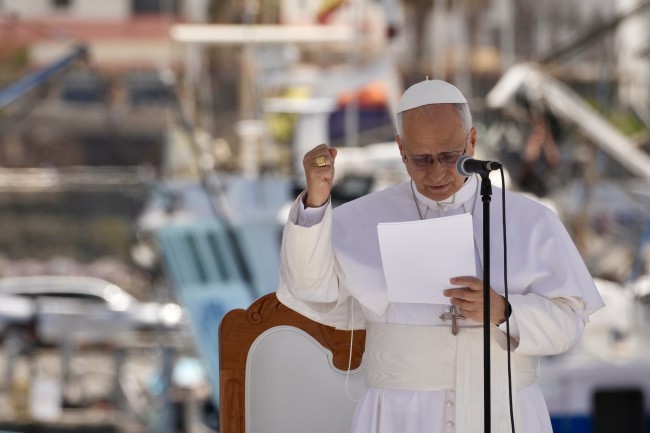
"A human conscience, and even more so a Christian conscience, cannot remain indifferent in the face of these graveyards of the sea, to the victims of shipwrecks and the lack of aid," he said, meeting those working to help integrate newcomers in Tenerife.
Every life lost on the dangerous Atlantic route to the islands from Africa and Latin America is a "failure for the human family," he said. But then "there is also a silent shipwreck" after they land, when they are left without accompaniment and exposed to exploitation or isolation.
"Solidarity arises from the recognition of human dignity and transcends any mere act of charity or philanthropy," he said, since "Christian charity flows from the love of God poured into the heart of the believer."
"In the presence of the needy, faith becomes concrete and love for Christ is transformed into deeds," he said June 12, the feast of the Sacred Heart of Jesus.
Once a person of faith realizes and embraces the love God has for them, then they are inspired "to prayer and action," he said in his homily at Mass at the large port of Santa Cruz.
"God is love," he said, and whoever "immerses themselves in it no longer lives for themselves. Open this sea of love to everyone!"
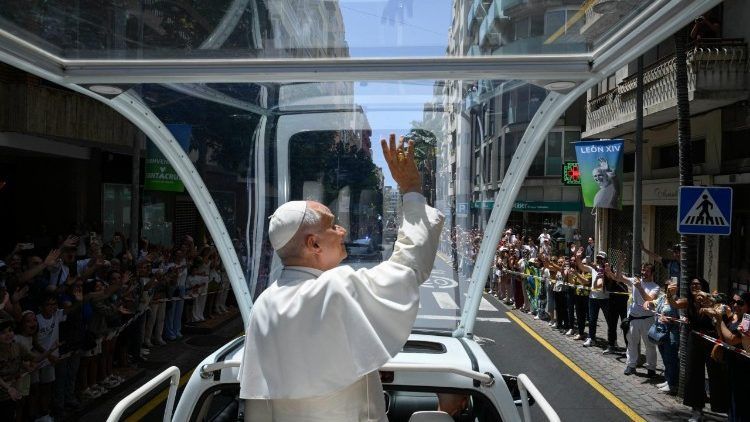
He became the first pope in history to visit the islands, after visiting Madrid June 6-9 and Barcelona June 9-11.
The strategic location of the Canary Islands, which lie below Spain and west of North Africa, made them an important stop for transatlantic voyages, beginning in the 15th century and the Age of Exploration. Colonized by Europeans, the islands became an important stop for vessels sailing to the Americas and the development of the transatlantic slave trade.
While European immigrants flooded the "new world" for centuries, today those migratory flows have essentially reversed, with high numbers of Africans as well as Latin Americans migrating to Europe.
The U.S. pope, who is a grandson and great-grandson of immigrants, was fulfilling a desire of Pope Francis, a son of Italian immigrants, to visit the Canary Islands and meet the new migrants arriving on these shores and the people who assist them.
It would have been the Argentine pope's fourth trip to a migrant entry point into Europe after Lampedusa in 2013 and Lesbos in 2016 and 2021 to draw attention to the consequences of unscrupulous traffickers taking advantage of people searching for a better future and the international community's lack of cooperation and initiative in regulating immigration and safeguarding its seas. Pope Leo will go to Lampedusa July 4.
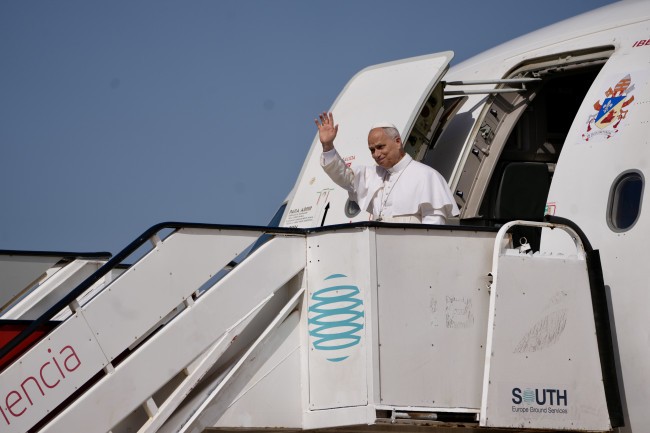
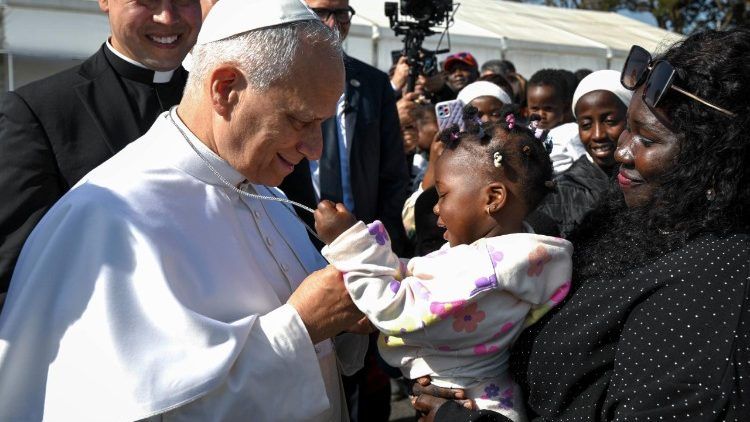
On the Canary Islands, Pope Leo visited a temporary shelter for those who are rescued at sea and met the men, women and children who survived their ordeals and are building a new life with the help of the islands' residents.
"Thank you for reminding the world that we are all people, that we all need love, peace and opportunities," one unidentified man living at the camp told the pope.
"We want to make a simple but deeply human request," an unnamed woman living at a nearby shelter told the pope -- that their dignity be respected and protected. "Our humanity must be held in higher regard than any legal status."
"Holy Father," Mbacke from Senegal said, "I ask you keep reminding the world that behind every young migrant there is a dream, a mother who is praying and a life that is worthy of a chance."
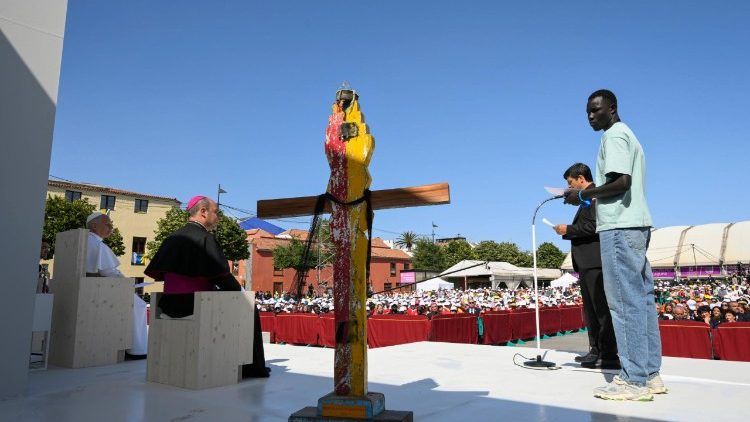
The festive encounter, held in an open square dedicated to Cristo de La Laguna, drew laughter and applause when Mbacke also asked the pope to do the "6-7" meme together with him to the cameras. The pope happily obliged.
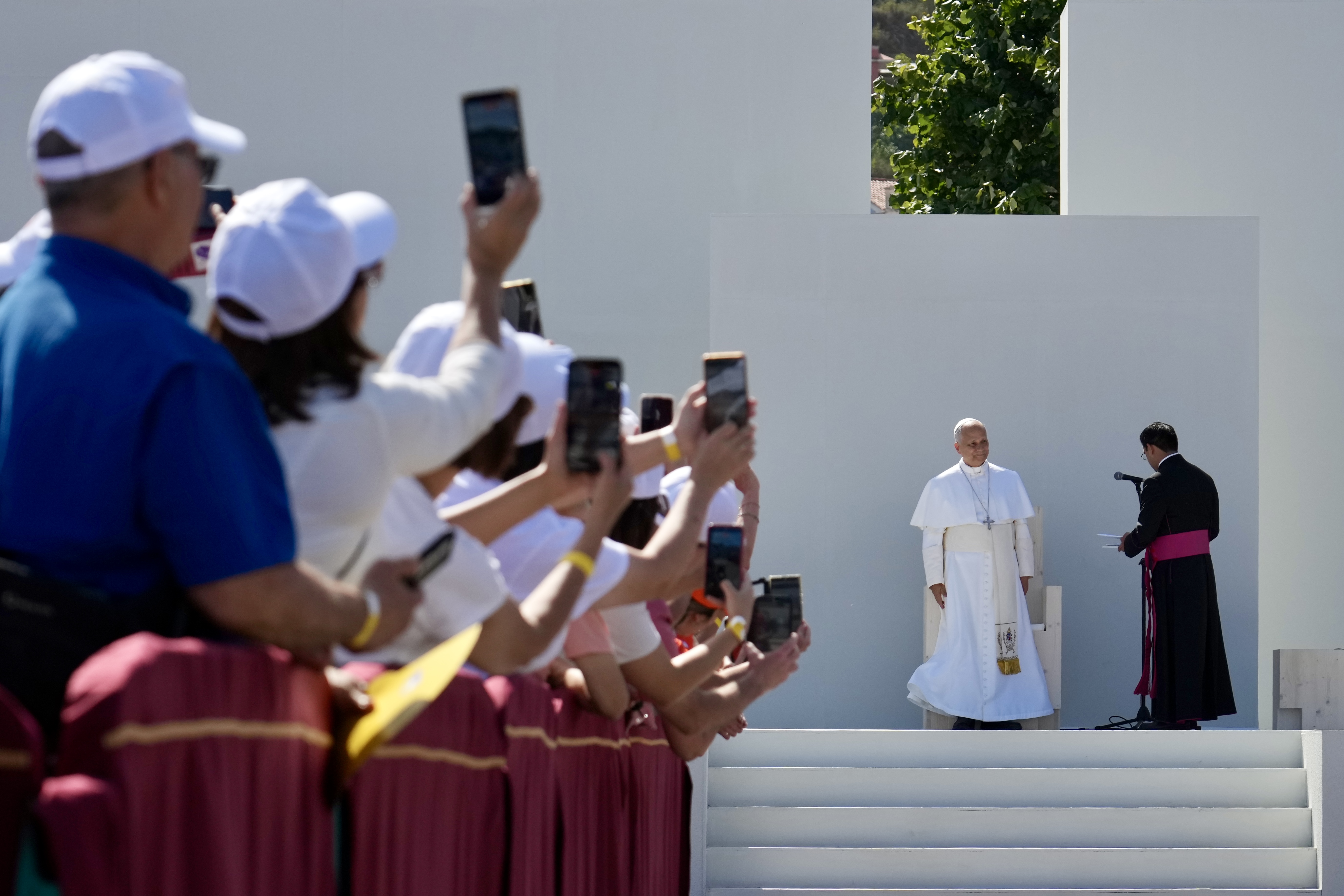
The visit came as Spain recently launched a mass regularization program aimed at legalizing the status of some 500,000 undocumented migrants. Meanwhile, many European Union member states have been enacting increasingly restrictive and punitive asylum rules, according to Amnesty International's European Institutions Office; and holding centers can be slow to process and unable to properly care for massive influxes of migrants.
"Human dignity demands legal and safe pathways, rescue and assistance, real cooperation against traffickers, effective protection for victims, serious processes of reception and integration, and policies that allow every person to live with dignity in their own land," the pope had said June 11, standing at the port of Arguineguin, on Gran Canaria.
"Here, people are rescued from the sea and lifeless bodies are recovered from the waters," Pope Leo said to those gathered at the port, including dozens of rescuers, ranging from simple fishermen to government maritime patrols.
"The successor of Peter cannot ignore these docks," he said. "The Church cannot ignore these waters or any place where hunger, thirst, violence, fear or exile continue to wound human dignity. Jesus’ disciples cannot dismiss the cries of those who call out in the night."
With two young men from Africa by his side, the pope tossed a floral bouquet in the blue water to honor and pray for the dead, and he blessed a wooden cross fashioned from the wreckage of boats capsized and destroyed on their voyage.
A rescuer, a charity worker and an immigrant turned entrepreneur told the pope their stories of perseverance despite so many obstacles in their way.
The Canary Islands are beautiful by day, "but at night it’s a different story: rough seas, total darkness and fragile boats loaded with human lives," said Tito Villarmea, a ship captain working with the public rescue network, Salvamento Marítimo.
"Over the years, together with my team, I have rescued more than 20,000 people. It's a number that hits hard and is impossible to forget," he said, recalling his own father and grandfather needing rescuing while working at sea.
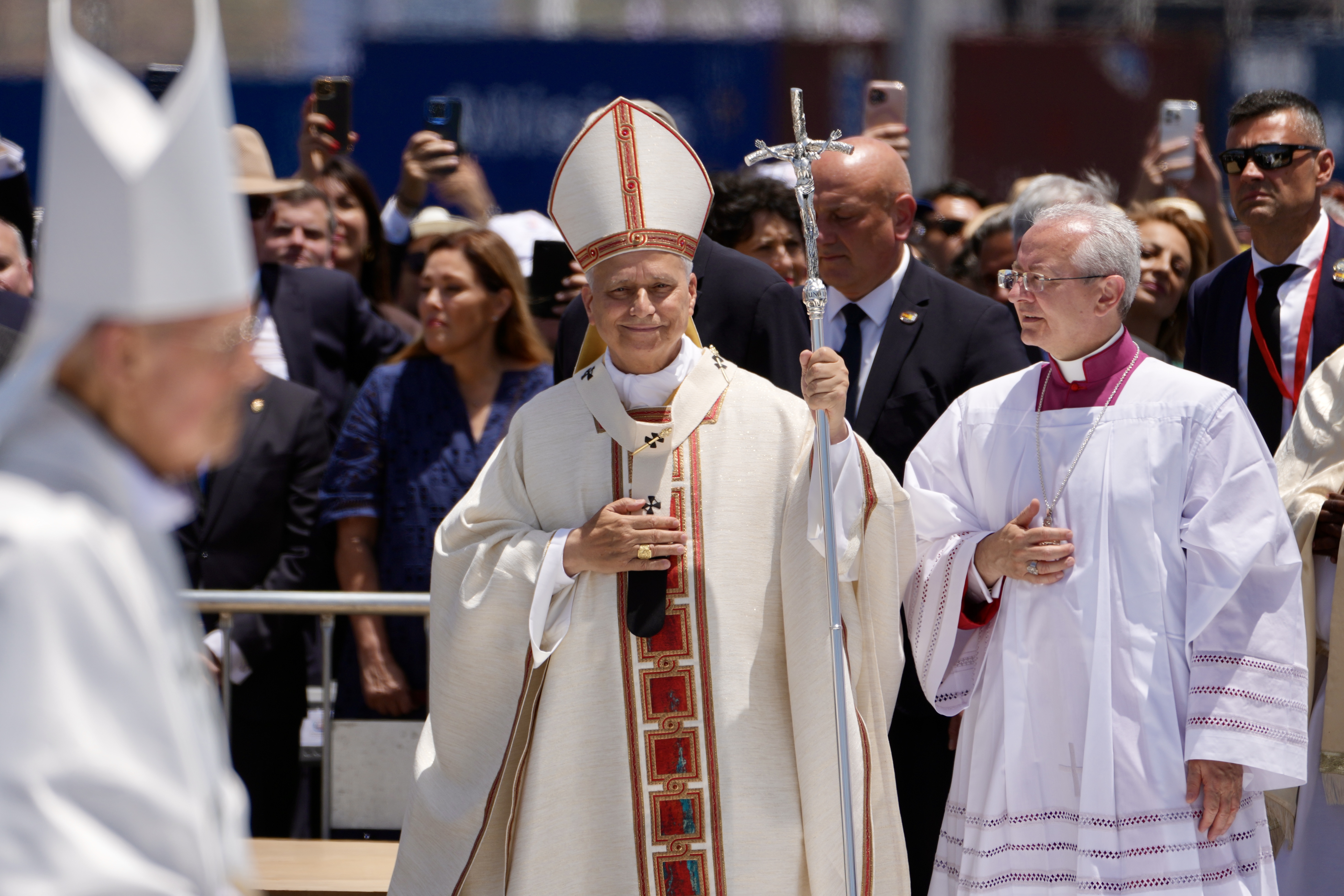
María Reyes Alemán Cruz, a volunteer with the local Caritas, said, "We learned that it wasn’t about solving everything, but about being there. Listening, offering gestures of kindness -- a pair of slippers, a coat, a cup of coffee -- or helping them obtain the necessary documents was, in itself, a way of supporting them."
One woman, who had been trafficked, held prisoner and forced to engage in prostitution, had her story read by another woman in order to protect her identity.
"Blessing's" story recounted the mafia holding her prisoner, subjecting her to a form of black magic, extorting her for 25,000 euros to pay them once she arrived in Europe and then witnessing people die in the boat launched ahead of hers.
The woman reading Blessing's story choked up reading aloud about Blessing being raped by her captor and forced to give up the baby that resulted when she arrived in Spain to become a sex worker.
Blessing eventually got her son back and, with the help of the Church, is building a new life.
"I thank God for having met these people who are here today, because they reached out to me when I needed it most," her written testimony said.
Pope Leo said he wanted the voices of the men and women who had spoken at the port to reach everyone, especially those in government and international organizations, and people of faith and good will.
"We cannot grow accustomed to counting the dead," he said. "Human dignity has no passport and does not lose its value when crossing a border."
In his forceful plea for migrants and refugees, the pope posed the question of what kind of world society has created "if so many brothers and sisters must risk death to seek life?"
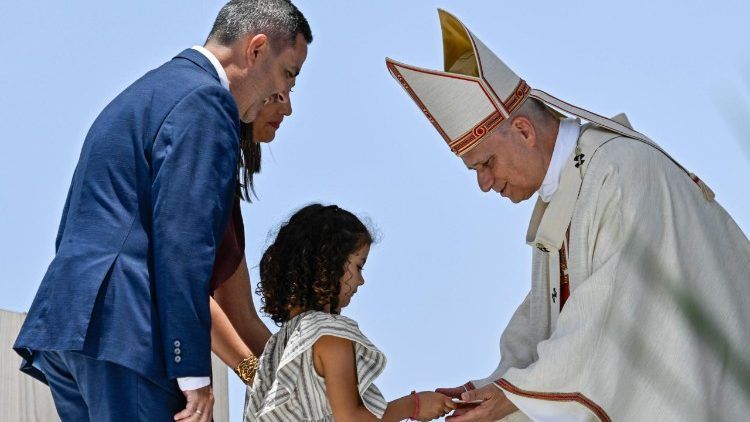
Following his visit to the port, the pope met with the diocese's Catholic community for a meeting at its cathedral and a Mass in the island's stadium.
These were the moments the pope connected the Sacred Heart of Jesus, celebrated June 12, with the Christian duty and ability to carry the cross of real solidarity.
"Indeed, our charity must not be mere material assistance, but must foster the integral development of the person -- spiritual, intellectual and physical -- and his or her dignified and constructive integration into the community," he said in his homily during Mass in the Gran Canaria Stadium.
Those who pretend to be self-sufficient and know everything believe they don't need God or others, he said in his homily June 11.
"The Heart of Jesus is humble," he said. He teaches that to experience the true joy of life, "we must step down from the pedestals of arrogance that divide us and see ourselves in the humility that unites us."
"The first 'guiding principle,' therefore, is to take up the cross of Christ," he said earlier at the cathedral the same day. "You do this every day, for example, as good Samaritans, accompanying and helping to carry the burdens of so many brothers and sisters who are crucified by life’s trials."
"Our vocation and mission: to build the Church together, founded on Christ, the 'cornerstone,' to build on what is good, to harmonize our differences and to work together for the good of all," he said.