In first encyclical, Pope Leo urges world to 'disarm' AI amid increased reliance
VATICAN CITY (CNS) -- Presenting the first encyclical of his pontificate, Pope Leo XIV warned that artificial intelligence must be "disarmed," urging governments, tech leaders and society to confront the rapidly growing technology before it weakens human relationships, critical thinking and peace itself.
With its authoritative teaching, the 82-page encyclical, "Magnifica Humanitas" ("Magnificent Humanity"), significantly boosts the Catholic Church's position as an active voice in discussions over artificial intelligence, autonomous weapons, labor, human dignity and the concentration of technological power among a handful of corporations.
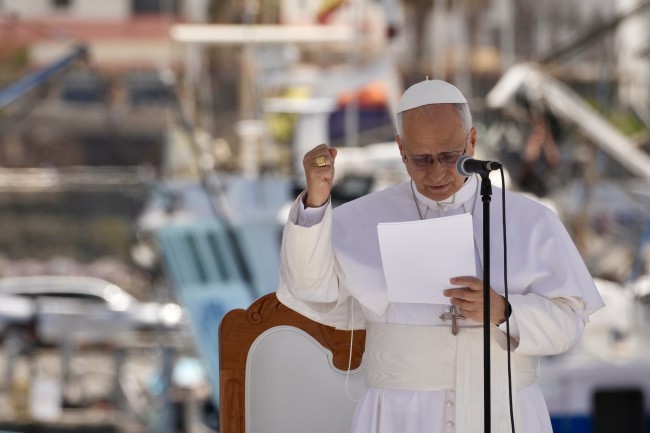
"Peace, not merely the absence of war, is justice at work," Pope Leo said May 25 during a presentation unveiling the document in the Vatican's Synod Hall to an audience filled with members of the Roman Curia, reporters and special guests. "But when technology weakens our critical sense, peace itself is at risk."
The pope said he wrote the encyclical after hearing from scientists, engineers, political leaders, parents and teachers about the promises and dangers posed by artificial intelligence. While some were enthusiastic about the technology, he said others expressed fears over future generations and increasingly autonomous weapons systems.
While he acknowledged the benefits of AI, Pope Leo was clear in saying more scrutiny needs to be applied to this developing technology.
"Artificial intelligence needs to be disarmed," the pope said. "The word is strong, I know, but deliberately chosen because this moment needs words capable of attracting attention, awakening consciences and indicating paths forward for humanity."
Pope Leo has frequently cautioned against the unchecked development of AI since the beginning of his pontificate, warning that the technology risks weakening human discernment, distorting reality and replacing authentic relationships with simulations of human interaction.
Anchoring his address on the church’s annual World Communications Day theme, the pope said artificial intelligence is increasingly simulating "human voices and faces," while raising deeper questions surrounding consciousness, responsibility, friendship and truth.
"We do not possess technical answers, nor do we seek to displace those with expertise," the pope said in his May 25 presentation. "But we bring a wisdom concerning the human that our present time desperately needs: every person is unique and irreplaceable."
The Holy See's engagement with major technology companies dates back nearly a decade through conversations known as the "Minerva Dialogues," which brought together church leaders and executives from Silicon Valley firms, including Google and LinkedIn.
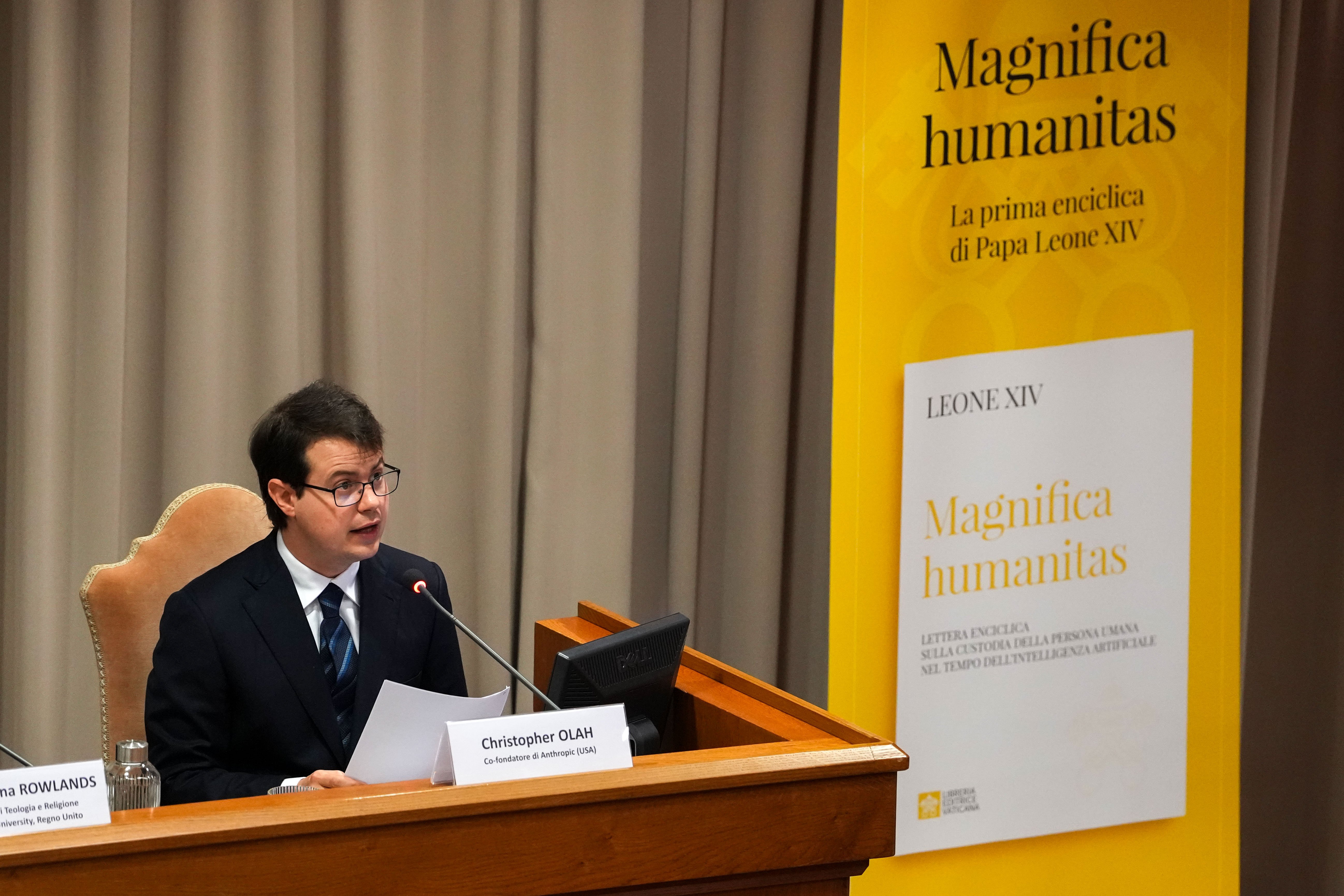
That's one of the reasons why one of the most anticipated speakers at the presentation was Chris Olah, co-founder of the artificial intelligence research company Anthropic, who praised the pope’s willingness to engage the industry directly.
Olah acknowledged that computer scientists alone cannot determine the ethical boundaries of AI because developers themselves are influenced by "incentives" such as ambition, competition and financial pressure.
"We need informed critics who will tell the labs when we are failing," Olah said. "We need moral voices that the incentives cannot bend."
He said the church could help shape discussions surrounding the equitable distribution of AI’s economic benefits, the impact of the technology on children and employment, and broader questions about human flourishing.
Olah also described aspects of advanced AI systems as "mysterious, even unsettling," saying researchers continue to discover behaviors within models they do not fully understand.
Others speaking at the presentation highlighted themes throughout the encyclical, including economic inequality, labor exploitation and the concentration of technological power.
Anna Rowlands, professor of political theology and Catholic social doctrine at Durham University in England, was another speaker on the panel with the pope. She said the encyclical "brings the vision of the Gospel to bear on the cultures of AI."
She said the document challenges the idea that artificial intelligence itself can "save" humanity while questioning whether too much influence over modern life is being placed in the hands of a small number of technology companies.
"In the interests of the common good, how can we resist such distorting concentrations of power in the hands of the few?" Rowlands asked.
Leocadie Lushombo, another panelist and professor of theological ethics at the Jesuit School of Theology of Santa Clara University, pointed to the encyclical’s criticism of extractive mining industries in the Global South that supply minerals used in AI infrastructure and data centers.
"Yes, AI can very easily be colonial," Lushombo said. "It is more likely to do much to further violate the rights of the Global South."
Cardinal Michael Czerny, prefect of the Dicastery for Promoting Integral Human Development, said the pace of this new technology is unparalleled, while the stakes are deeper, concerning "the very nature of human coexistence."
He went on to say that the most original contribution the Christian faith brings to the discussion on AI is the "conviction that human beings always transcend the sum of their achievements, their data profiles and any possible technical simulation, because they are called to a fullness of life that finds its truth in relationship and its fulfillment in a constant and sincere gift of oneself."
Cardinal Víctor Manuel Fernández, prefect of the Dicastery for the Doctrine of the Faith, said the document insists humanity must not lose sight of its own dignity despite technological advancement.
"For every human being possesses infinite dignity and never loses that sublime capacity for love which God bestowed upon humanity when He created us," Cardinal Fernández said.
He also emphasized one of the encyclical’s central arguments: that artificial intelligence cannot replicate humanity’s capacity to suffer, grow and love.
Pope Leo’s encyclical states that humanity carries within itself "the lessons that are etched like scars, a memory of the journey taken between freedom and falls, dreams and disappointments," he said.